

When it comes to flatbed trucking, having the right equipment on hand makes loading up easy, safe and fast. Understanding the types of equipment at your disposal will help you make smart decisions about how to equip your trailer or fleet for success.
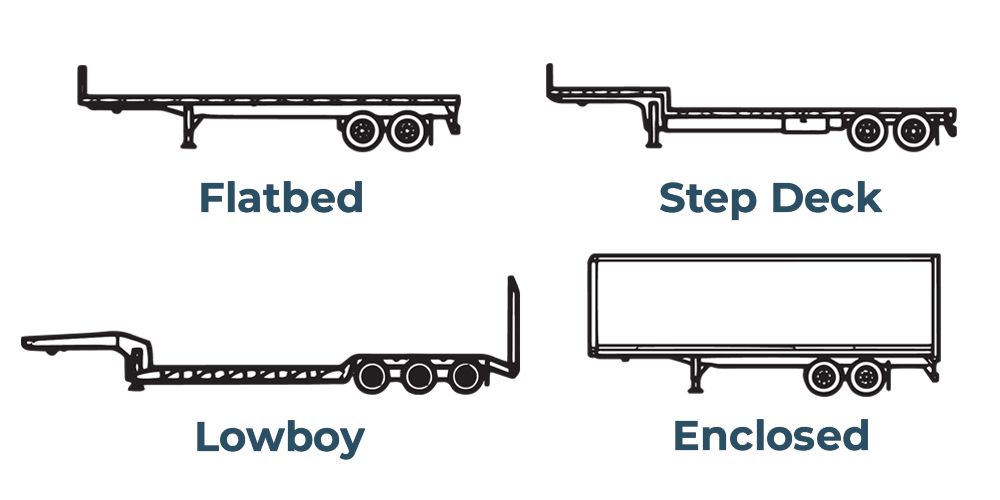
Flatbed trucking equipment: The basics
Flatbed equipment is anything used to load, secure, protect, and move cargo on a flatbed trailer. A flatbed trailer differs from other types of trailers in several ways:
- Standard deck height (unlike a step deck or drop deck trailer)
- Open to the elements (unlike an enclosed semi-trailer or curtainsider truck)
- Does not expand (like an RGN trailer or low-boy)
Although there is overlap between the type of securing equipment you can use for hauling with each type of trailer, there are distinctions, as each trailer type is also better suited for certain kinds of cargo.
Understanding what sets flatbed trailers apart then sets us up for the next criteria that impacts equipment: The freight type, weight, shape, edges, amount of weather exposure and route conditions.
Loading Up: Cargo or Vehicles
- To load up stationary cargo, a forklift or crane will do the heavy lifting and no additional equipment will be required for loading.
- To load up vehicles or equipment, loading ramps allow the vehicle to be driven directly onto the flatbed deck, which saves time trying to find a loading dock or attempting to lift a 10,000 lb.+ vehicle into position with a crane.
Securing the Load: Straps, Chains, Binders and Winches
Once the load is in place, there's a variety of tie-down and securement options to keep it there until it arrives at its destination.
Ratchet straps and winch straps are common tie-downs for flatbed freight because they are fast to use and fit many load shapes. Think palletized loads, lumber, building materials and other cargo that needs firm pressure without excessive compression.
A ratchet strap tightens with its built-in ratchet, while a winch strap feeds into a trailer winch and tightens with a winch bar. Both are meant to pull the load down and help stop movement during braking, turns, and road bounce.
Winches and winch bars do not replace straps or chain, but they make it possible to tighten winch straps to the right tension on trailers with winch tracks.
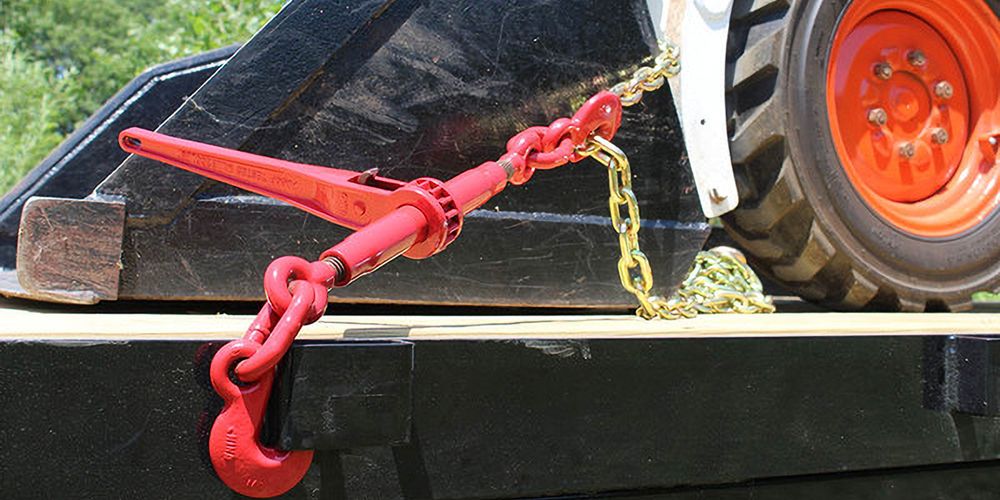
Transport chain is preferred for heavy machinery, steel, pipe, and other dense cargo because it has high strength and resists cuts and abrasion better than webbing. Chain binders are used with transport chain to remove slack and apply tension so the chain stays tight on the load. Ratchet binders tighten by turning the handle, and lever binders tighten by using handle force to lock the chain in place.
The right choice depends on the cargo weight, shape, edge condition, and the working load limit of each tie-down and anchor point.
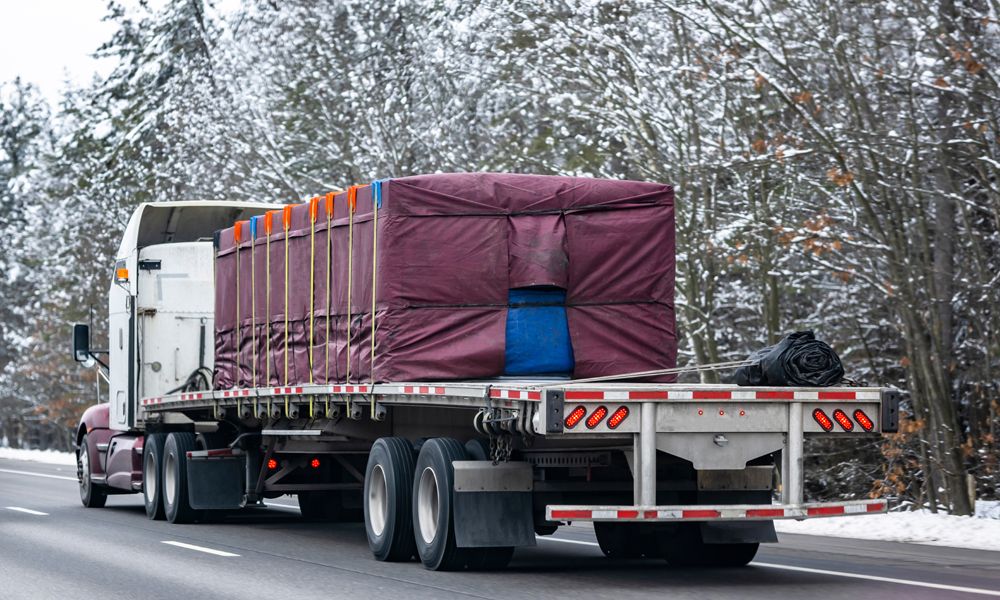
Protecting and Covering: Tarps, Corner Protectors and Edge Protectors
Before securing the load, it's important to ensure that a) the load is protected appropriately from the elements that will be encountered on the drive, and b) that the load and tie-downs will be appropriately protected from each other, aka abrasion, crushing and similar scenarios.
Tarps protect cargo from rain, road spray, dirt, and wind. They also help prevent loss from rust, stains, swelling, and surface damage.
- Steel tarps are usually heavy, and designed to be used in multiples for large loads so that drivers aren't handling one massive, dense tarp. They work well for steel coils, sheet metal, and similar loads. They're usually square, with no drop, or tarp overhang, and are built to be overlapped, tucked and secured as needed to cover the load.
- Lumber tarps are larger and shaped to cover tall, square freight like lumber, drywall, and bundled building materials. They usually feature a drop, or flap, that is designed to hang down over the front of the load without leaving excess tarp material to secure.
- Machine tarps are built for oddly-shaped industrial machinery and feature an array of sizes with multiple D-rings for tie-down placement.
- Smoke tarps cover the front of the load, and they help block soot, bugs, and road grime from hitting cargo in transit. For simpler jobs, a basic tarp may be enough when the load needs light weather coverage.
Edge and corner protectors matter because straps can cut, fray, or lose tension on sharp edges. They also spread strap pressure, so the cargo is less likely to get crushed or marked. If the strap rides over a hard corner without protection, both the strap and the securement can fail faster.
The Supporting Team: Trailer Hardware and Accessories
D-rings, anchor points, and rub rails give you the places where straps and chain connect to the trailer.
Flat hook winch straps and wire hook winch straps help match the tie-down to those connection points, so the gear seats right and stays in place.
Lighty-duty and smaller flatbed trailers sometimes use E-track or other track systems when the load and trailer setup allow it, although standard commercial flatbed trailers do not.
These parts support securement, but they do not make up for using the wrong strap, chain, or binder for the load. You still need to match the tie-down type, working load limit, and fit to the cargo and the trailer. A flatbed, step deck, or other open-deck trailer may need different hook styles, tie-down lengths, or anchor locations because deck height, trailer frame, and freight position can change how the load must be secured.
How to Choose the Right Loading and Securement Equipment for the Load
Match the equipment to cargo type and load shape
Flatbed trucks carry many load types, and each one calls for a different securement plan. Lumber, drywall, and other bundled building materials often work well with straps because the load is broad, stacked, and fairly even. Palletized freight also fits straps in many cases, especially when the cargo sits flat and does not have sharp edges. In these cases, edge protectors help keep strap tension and prevent damage. Machinery, steel, and other dense freight usually need transport chain and binders because the weight is higher and the load can shift with more force. Pipe can go either way, but round shapes need extra care because they can roll if they are not blocked and tied down right. Irregular cargo often needs a mix of gear because odd shapes create weak spots, sharp corners, and uneven pressure points. The main rule is simple: use straps for lighter, stable loads, and use chain for heavy, hard, or compact freight. Before each haul, match the gear to the cargo shape, weight, edges, and trailer anchor points
Check working load limits, fit, and connection points
Choosing flatbed trucking equipment is not just about having a few straps or chains in the box. Before a haul, check the working load limit of each tie-down and make sure it matches the freight. Measure the load so you know the right strap or chain length. Check strap width and chain size because heavier cargo may need stronger gear. Look at the end fitting style and make sure it fits your trailer anchor points. Flat hooks, wire hooks, and chain hooks must seat right or they can shift under tension. Count how many tie-downs the load needs based on its size, weight, and shape. Then inspect winches, binders, D-rings, and rub rails for damage before you leave. A simple pre-haul checklist helps you choose the right load securement gear and avoid costly mistakes.
Plan for weather, road conditions, and cargo protection
Tarping is needed when freight can be damaged by rain, road spray, dirt, sun, or steady wind. Finished goods, bagged products, drywall, machinery parts, and steel that can rust often need coverage before the truck leaves. Road spray matters even in clear weather because water, salt, and grime can hit the load from below and from passing traffic. Wind also matters because it can lift loose tarp sections, wear down strap contact points, and push dirt into exposed cargo during a long trip. Weather changes equipment needs because a short dry run may need light coverage, but a long haul through mixed conditions may call for full tarp coverage and tighter securement checks. If straps cross sharp corners under a tarp, use corner protectors so the webbing does not cut and lose tension. If you haul painted parts, finished metal, or other marked surfaces, add edge protection to reduce rub marks and pressure damage. The goal is to protect the cargo with the right tarps and load securement gear, not to pile on extra gear that adds time, weight, and risk.
Build a basic flatbed equipment kit without overbuying
Start with the gear you will use on most loads, not the gear you might need once a year. A basic flatbed equipment kit should cover common load securement jobs first, so focus on straps, winch straps, edge protectors, tarps, and a few good trailer winches or winch bars if your trailer uses them. Keep enough tie-downs in the right lengths to handle palletized freight, lumber, and building materials, because those are common flatbed loads. Add transport chain and chain binders when you begin hauling machinery, steel, pipe, or other heavy freight that calls for stronger securement. After that, build out with specialty items like steel tarps, smoke tarps, extra corner protectors, or ramps if your loads require them. This approach helps you control cost, stay job ready, and avoid filling the truck with gear that does not match your freight.
How a Flatbed Trailer Should be Loaded
The short answer: As safely as possible. That means appropriately balanced weight distribution, stable placement, and reduced overhang in any direction. By positioning the load in the safest spot up front, you'll get the most out of your securement equipment and set yourself up for trucking success. If you place it without consideration, there's a chance of the load shifting in transit even with securement.
Legal Requirements Around Flatbed Load Securement
Cargo must be secured against shifting, falling, or blowing off the trailer, and tie-down count and equipment rating matter. Knowing your route before you drive will help you identify potential route issues such as bridge heights, weight limits and tight turns.
For more details around legal load limits, read Maximum Legal Freight Height, Length, Weights: Flatbed vs Step Deck Trailers.
What to Check Before the Truck Hits the Road
Before the truck moves, check that the load sits in the right position on the deck and that the weight is balanced across the axles. Make sure the cargo is stable, sits flat where it should, and does not create unsafe overhang.
Then, inspect every tie-down to confirm you used the right type, the right count, and proper anchor points. Check strap and chain tension so nothing is loose, but do not overtighten and damage the freight. Look at every corner and edge contact point because sharp edges can cut webbing and reduce holding power. If needed, add edge protection or corner protectors before the load leaves.
If the load is tarped, check that the tarp fits well, covers the cargo, and is tied down so wind cannot tear it loose. After that, do one more full walk-around and recheck securement before departure.
You should also plan to stop and recheck the load shortly after getting on the road and again when conditions change.
Common Questions About Flatbed Trucking
How difficult is flatbed trucking?
Flatbed work is more hands-on than some other trucking roles because loading, tarping, and securement take time and physical effort.
Do you need a CDL for a flat bed trailer?
Yes
Is flatbed trucking profitable?
Flatbed trucking can be profitable, but it depends on the freight, lane rates, and your costs. Flatbed freight often pays more than dry van loads because the work takes more time and skill. Drivers also deal with tarping, securement, weather, and harder load checks. But higher rates do not always mean higher profit. Fuel, permits, insurance, gear replacement, and empty miles can cut into the money fast. Owner-operators usually do best when they know their costs and choose loads that fit their trailer and equipment. Fleet managers look at uptime, driver efficiency, and load mix to protect margins. Profit also tends to improve when you can handle specialized freight such as steel, machinery, or oversized loads. If you price the job right and keep the truck moving, flatbed trucking can be a strong business.
What are high-paying flatbed loads?
High paying flatbed loads often include steel, machinery, oversized equipment, pipe, and specialized building materials. These loads tend to pay more because they need more skill, more securement gear, and more time at pickup and delivery. Rates can also rise when the freight needs tarps, chains, permits, or careful route planning. Heavy haul and overdimensional loads may bring in strong revenue, but they also raise costs and risk. The best paying load is not always the one with the highest rate, because fuel, wait time, gear wear, and empty miles affect profit. Owner-operators and fleets do better when they match the load to the trailer, the securement setup, and the lane.


